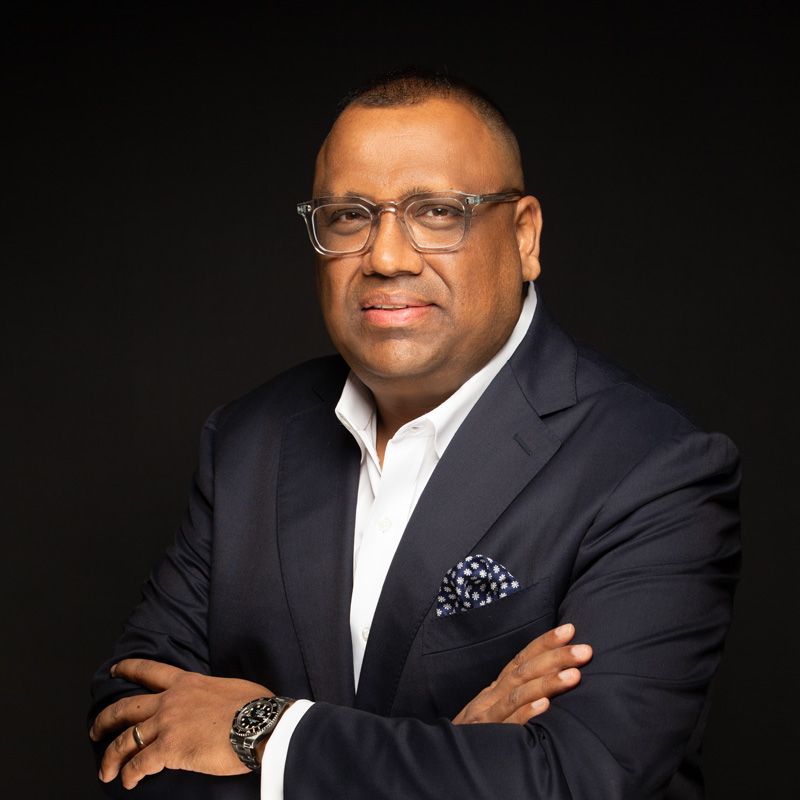
Rahul Bhartiya, Founder and Chief Executive Officer of Vedas Fund, used his appearance in the “In The Hubbis Hot Seat” session to outline the rationale behind launching an India-focused multi-manager strategy. Based in Mauritius and established in late 2023, the Vedas Opportunities Fund was initially conceived as a vehicle for Bhartiya’s own capital, but has since evolved into a broader product targeting international investors seeking differentiated access to Indian equities.
Bhartiya’s remarks reflected both a personal reconnection with the Indian market after more than two decades abroad and a structural thesis about capacity constraints, manager selection and the maturing institutional landscape within India. At a time when many global investors access the market through large exchange traded funds (ETFs) or sizeable regional mandates, he argued that a more agile, manager-driven approach may offer an alternative path to outperformance.
From Personal Capital to Product Structure
Bhartiya explained that the fund was created in the final month of 2023. “When I created the fund, it was, I thought, I’d be deploying my own capital into India, and would be accessing some other friends’ capital who would want to co-invest with me,” he said. However, conversations with peers prompted a broader ambition. “A friend of mine convinced me to create a product,” he added.
Drawing on his previous experience managing a multi-manager strategy in the Middle East and North Africa region, Bhartiya began exploring how a similar structure might be applied to India. “Why don’t I create a multi manager strategy for India?” he recalled thinking.
The result is a fund that allocates capital to six underlying managers based in India. According to Bhartiya, these managers are on the ground, running independent strategies with defined processes and research frameworks. The product is designed to go live this month, with Bhartiya committing his own capital alongside early institutional backers, including Singapore-based multi-family offices (MFOs).
Assessing Structural Change in India
In describing his due diligence process, Bhartiya noted that India’s asset management and wealth management industries have undergone meaningful transformation over the past decade. “When I started doing my rounds to meet these managers in India and many more, I realised that India has changed in the last decade,” he said.
He pointed not only to macroeconomic developments, but also to the evolution of domestic fund management capabilities. “There are a lot of very good guys who are running their own shop, and they are doing up a lot of good work,” Bhartiya observed. In his assessment, these managers can be compared to Western-style firms in terms of discipline and clarity of strategy.
He also highlighted the increasing use of technology and data analytics in investment processes. “They have been implementing a lot of artificial intelligence (AI) into their research data analysis,” he said. In addition to traditional balance sheet and cash flow analysis, teams are using broader datasets to inform decision-making.
This blend of fundamental research and data-driven analysis underpins the fund’s manager selection
criteria, which emphasise both strategic clarity and operational depth.
Capacity and Market Structure Considerations
A central plank of Bhartiya’s thesis relates to market capacity and the concentration of large capital flows. Many international investors access India through broad ETFs or large-cap mandates. However, he argued that this approach may overlook structural constraints.
“If you will look at the stocks which are upwards of $5billion in market capitalisation in India, there are only 500 stocks, and there is only so much a large manager can do,” he said. In his view, the Indian market does not yet have the depth to absorb very large pools of capital without affecting liquidity and performance.
For this reason, Vedas Fund has selected managers of a size that allows them to remain agile. “We chose basically managers who are of a size where their funds can be agile,” Bhartiya explained. The objective is to create a portfolio capable of delivering returns above the index by combining differentiated strategies rather than replicating benchmark-heavy exposures.
The fund is targeting returns of more than 15percent in US Dollar terms on an ongoing basis. While acknowledging that India has experienced a strong three- to four-year run following the COVID period, Bhartiya noted that markets have been more subdued over the past 18 months due to stretched valuations. Nevertheless, he remains constructive on the broader economic cycle. “The overall economic cycle in India is still very, very positive,” he said.
Shifting Perceptions of India
Bhartiya contrasted current investor sentiment with attitudes he encountered 15 years ago. At that time, he recalled suggesting the creation of an India fund while working in Dubai, only to be met with scepticism. Today, he argued, India is viewed as a core strategic allocation for many families, wealth managers and family offices.
“India has become a very prominent market where people have to, or would look at allocating capital on an ongoing basis,” he said. In his assessment, India now forms part of most long-term strategic asset allocations rather than being treated as a peripheral emerging market.
This shift in perception underpins the fund’s positioning. By offering curated access to local managers rather than passive exposure, Bhartiya seeks to provide investors with a more nuanced entry point into the market.
Aligning Interests and Building Scale
Bhartiya emphasised alignment of interests as a key element of the fund’s structure. He is committing his own capital to the vehicle, alongside early institutional investors. While the initial focus is on India, he indicated that the strategy may evolve over time as the fund grows and performance is established.
For now, the priority is execution and disciplined manager oversight. The six selected managers represent the starting allocation, and the multi-manager framework is intended to diversify style, sector focus and risk management approaches.
By combining multiple managers, the fund aims to mitigate idiosyncratic risk while preserving the agility that Bhartiya sees as essential in the Indian context. The structure also allows investors who may lack the resources or local network to identify and monitor individual Indian managers to access a curated portfolio.
Positioning Within Global Portfolios
Bhartiya’s presentation positioned Vedas Fund as a complement to existing India exposures, particularly those accessed through large ETFs or global emerging market funds. For investors already convinced of India’s structural growth story, the fund seeks to offer a differentiated implementation strategy.
At the same time, he acknowledged the importance of risk awareness in a market that has experienced rapid valuation expansion in recent years. The emphasis on manager selection, data integration and agility reflects an attempt to navigate potential volatility while targeting above-index returns.
As India continues to deepen its capital markets and attract foreign capital, the competitive landscape for active managers is likely to intensify. Bhartiya’s multi-manager approach represents one way of aggregating local expertise within a single, internationally accessible vehicle.
In closing, he reiterated his willingness to engage further with investors interested in India allocations. The launch of the Vedas Opportunities Fund marks the formalisation of what began as a personal allocation strategy into a structured product aimed at institutional and family office capital.
As global portfolios recalibrate towards structural growth themes in emerging markets, India’s trajectory remains under close watch. For Bhartiya, the opportunity lies not simply in market beta, but in identifying agile managers capable of navigating a market that is expanding in prominence but still constrained in capacity.